The Role Of Architecture In High End Landscape Design
Great outdoor spaces start with a clear relationship between the home and its surroundings. Architectural lines, materials, heights, and proportions guide the placement of paths, walls, seating areas, and structures. The result feels cohesive from every viewpoint.
A well-considered architectural framework gives high end landscape design lasting character and visual clarity across the entire outdoor setting for the residence.
Architectural harmony sets the tone
Architecture establishes the visual language for the entire exterior. Clean lines, balanced proportions, natural materials, and carefully selected finishes allow outdoor features to relate naturally to the residence. A contemporary home may pair with geometric paving, linear planting beds, and sculptural walls, while a classic villa suits stonework, formal greenery, and graceful arches. This connection gives the property a unified appearance.
Structures define outdoor experiences
Architectural structures divide large outdoor areas into purposeful zones. Pergolas provide shade above seating spaces, retaining walls introduce level changes, and garden pavilions offer intimate locations for relaxation. Outdoor kitchens, fire features, and covered terraces also benefit from strong architectural frameworks. Each structure supports a specific activity while maintaining visual consistency throughout the exterior.
Materials connect indoor and outdoor spaces
Material selection allows architecture to extend naturally beyond the walls of a home. Stone flooring can echo interior finishes, while timber screens introduce warmth around terraces and courtyards. Large glass openings strengthen the connection between indoor rooms and outdoor areas. Consistent textures and complementary tones give the entire setting a sophisticated character without making individual features compete for attention.
Proportion keeps every feature balanced
Scale influences the comfort and appearance of an outdoor setting. Oversized structures may dominate a compact garden, while undersized features can disappear beside a large residence. Skilled designers assess building dimensions before selecting walls, steps, planters, pergolas, and seating elements. Proportion helps each component occupy its proper visual position and supports a polished composition.
Lighting highlights architectural details
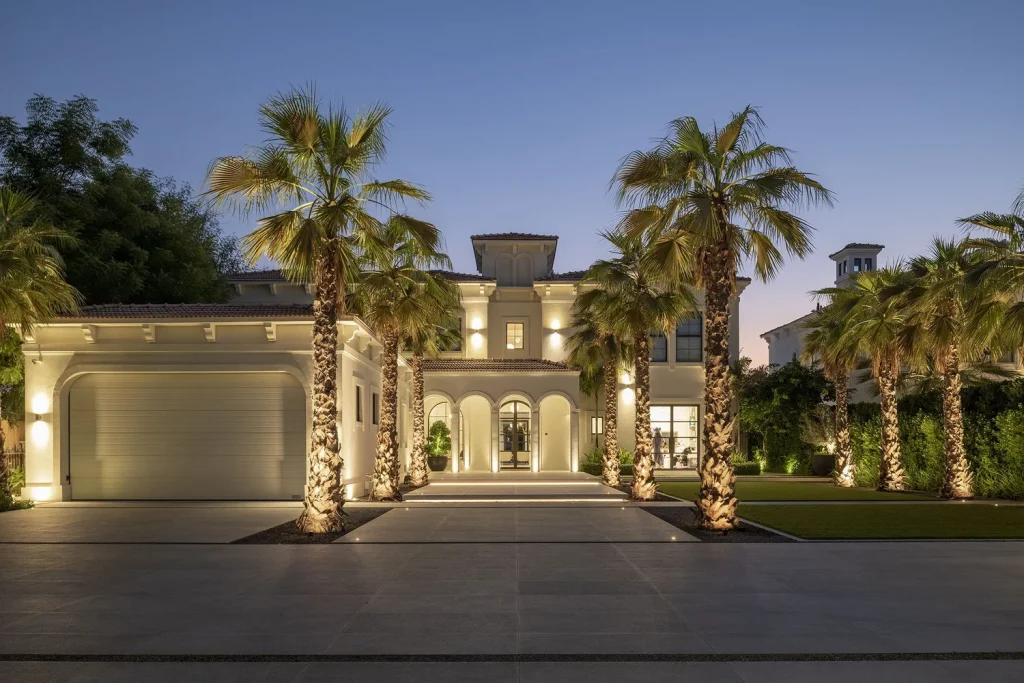
Lighting gives architectural features greater presence after sunset. Recessed fixtures can outline steps, concealed illumination can accent walls, and focused beams can draw attention toward columns or textured surfaces. Designers also use subtle lighting around pathways and seating zones to support visibility and atmosphere. A balanced lighting scheme allows the architecture to remain expressive throughout evening hours.